Skilled Nursing
Why This Is Personal for Almost Everyone
Before we move on, I want you to think about something. How old are your parents? Your in-laws? Your aunts and uncles?
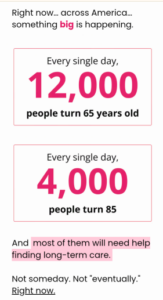
If they’re in their sixties, seventies, or eighties, the probability that at least one of them will need some form of senior care is statistically overwhelming. Seventy percent of people who reach sixty-five will need long-term care services at some point. That’s not a scare tactic.
It’s the reality that actuaries, insurance companies, and healthcare systems have been modeling for decades.
Most families don’t start thinking about this until they’re in crisis. By then, they’re making rushed decisions with imperfect information, often while processing grief, guilt, and fear simultaneously.
Senior living care breaks down into four distinct levels. Each one serves a different population, charges different fees.
Level 1: Independent Living
Think of independent living as an apartment community designed for active seniors. Residents have their own units, sometimes full apartments, sometimes cottages. They can come and go as they please.
The community typically provides meals, housekeeping, social activities, and transportation.
Residents here are generally healthy. They don’t need help bathing, dressing, or taking medication. They’ve simply decided they’d rather not maintain a house anymore, or they want the social connection and security of a community.
Monthly cost: $2,000 to $6,000 depending on location and
amenities.
Level 2: Assisted Living
This is where things shift. Assisted living residents need help with what the elder care communities call “activities of daily living,” which includes bathing, dressing, medication management, and mobility assistance. Staff is available around the clock, yet residents still have private or semi- private rooms and maintain as much independence as possible.
Most families first encounter assisted living after an unhealthy event: a fall, a stroke, a diagnosis that makes living alone not safe. These are often families in crisis, exactly the families who need the most help navigating the process.
Monthly cost: $4,000 to $8,000
Level 3: Memory Care
Memory care is a specialized form of assisted living designed for residents with Alzheimer’s, dementia, or other cognitive impairments. These communities are typically secured (residents can’t wander off) and have specially trained staff and structured programming.
Families placing a loved one in memory care are usually exhausted.
They’ve been managing increasingly difficult behaviors at home:
wandering, confusion, aggression, sundowning. They’ve reached a breaking point. The emotional weight of this decision is enormous, and the families who go through it desperately need a compassionate guide like us.
Monthly cost: $6,000 to $12,000
Level 4: Skilled Nursing
This is the highest level of care, what most people picture when they hear “nursing home.” Skilled nursing facilities provide 24-hour medical care from licensed nurses. Residents here typically have complex medical needs: IV therapy, wound care, ventilator support, post-surgical rehabilitation.
Monthly cost: $8,000 to $23,000.
Here’s another fact that shocks most people: only three to four percent of Americans have long-term care insurance. That means 96% of families facing a senior care transition are paying out of pocket.
The average cost of care across all levels runs about $6,500 per month. That’s $78,000 a year. Most families can’t sustain that indefinitely from savings alone.
FREE CONSULTATION CLICK HERE